📖 Introduction
The world is getting faster — not just in lifestyle, but in connectivity.
We’ve come a long way from 3G browsing speeds to 4G streaming, and now 5G has made ultra-fast mobile internet a reality.
But just as we’re getting used to 5G, the tech world is already talking about 6G — and even early concepts of 7G.
So what’s the real difference? Where is 6G being tested right now? And when will countries in Asia get it?
Let’s break it down in simple words.

⚡ What Is 5G?
5G stands for Fifth Generation Wireless Technology.
It’s the network standard currently being used across most major countries — including the USA, UK, South Korea, Japan, India, and parts of Europe.
Key features of 5G:
- Speeds up to 10 Gbps (about 100× faster than 4G LTE)
- Extremely low latency (~1 ms), meaning faster response time
- Supports Internet of Things (IoT), smart homes, and autonomous cars
- More stable connections in crowded areas
In short, 5G made “real-time” internet possible — video calls, gaming, and remote surgery all improved drastically because of it.
🚀 What Is 6G?
6G stands for Sixth Generation Wireless Technology — the next step after 5G.
It’s still under development and testing, but experts say it will completely change how we use the internet.
Expected features of 6G:
- Speeds up to 1 Tbps (yes, 100× faster than 5G)
- Latency close to 0.1 milliseconds
- Uses AI-driven networks that automatically manage themselves
- Will power metaverse, holograms, smart cities, and next-gen robotics
In simple terms, 5G connects people — 6G will connect everything intelligently.

🌎 Where Is 6G Being Used or Tested Right Now?
As of 2025, 6G is not commercially available anywhere — it’s in the research and prototype phase.
However, several countries are already leading in its development:
| Country | 6G Progress | Key Projects |
|---|---|---|
| 🇺🇸 USA | Testing stage | AT&T, Verizon, and NTIA research on 6G frequencies |
| 🇨🇳 China | Advanced tests | Launched the world’s first experimental 6G satellite in orbit |
| 🇯🇵 Japan | Early rollout plans | NTT DoCoMo and Nokia 6G lab collaboration |
| 🇰🇷 South Korea | Preparing for early deployment | Samsung & LG 6G prototypes |
| 🇪🇺 Europe (EU) | Joint research | Hexa-X and 6G Flagship projects funded by EU |
🔍 Estimated timeline:
- 2025–2026: Field testing in advanced countries
- 2028–2030: Limited rollout
- 2030 onward: Global commercial launch
🌏 When Will 6G Come to Asia?
In Asia, 5G has already been deployed in major countries like India, Pakistan, Japan, South Korea, Singapore, and China.
But 6G will likely arrive between 2029 and 2031 depending on country readiness.
Here’s a regional look:
- China & Japan: Expected to launch first (by 2028–2029)
- South Korea: Strong contender for world’s first commercial 6G network
- India: Testing expected around 2027–2028
- Pakistan & Southeast Asia: May see rollout between 2030–2032 after infrastructure upgrades
So, yes — Asia will join the 6G revolution within the next decade.
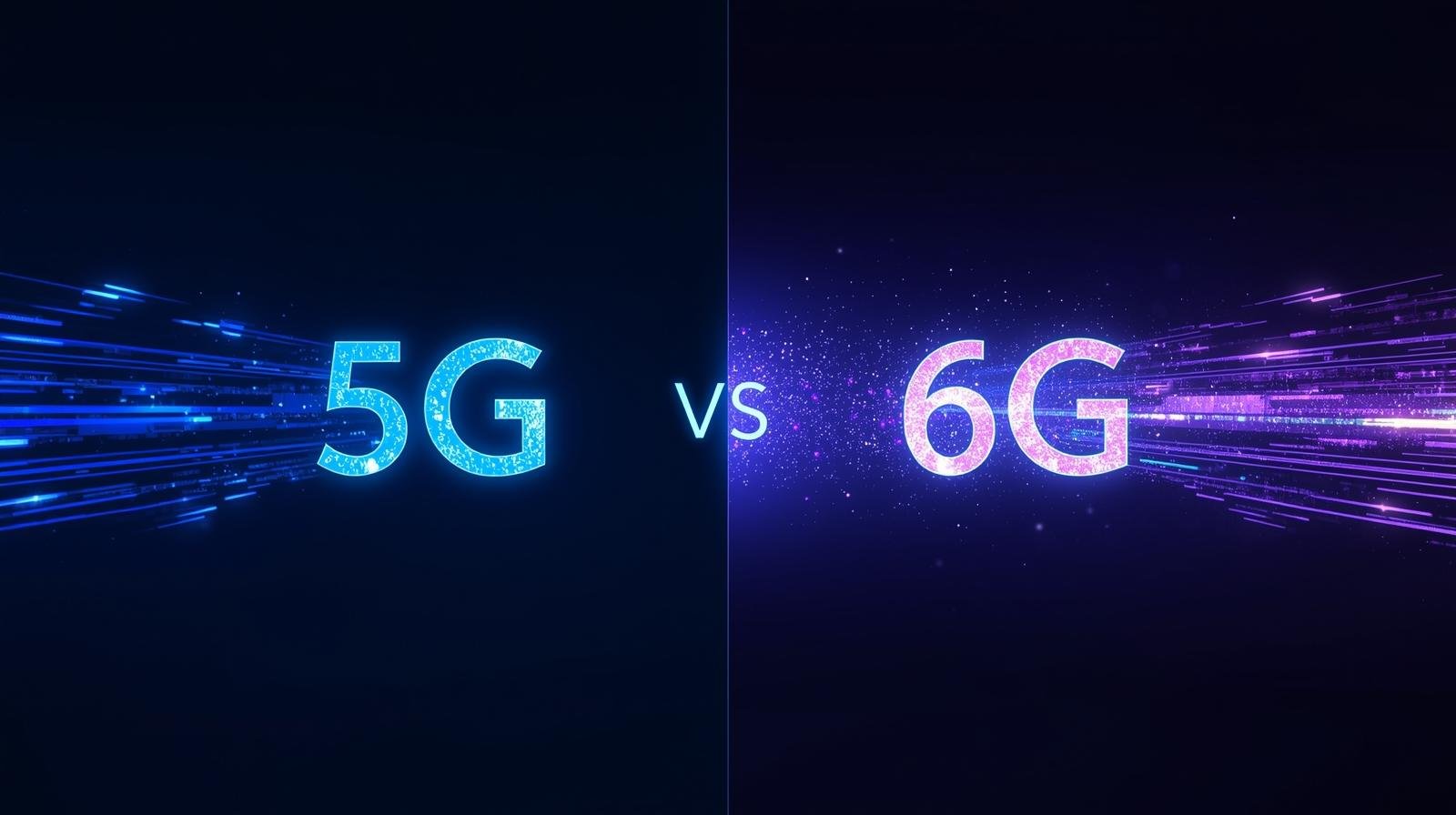
⚙️ 5G vs 6G — The Key Differences
| Feature | 5G | 6G |
|---|---|---|
| Speed | Up to 10 Gbps | Up to 1 Tbps (100× faster) |
| Latency | ~1 ms | ~0.1 ms |
| Technology | 4G upgrade + IoT | AI-based intelligent networks |
| Connectivity | People & devices | Real-world + virtual world |
| Launch Year | 2019–2025 | Expected 2028–2030 |
| Use Case | Video calls, IoT, gaming | Metaverse, robotics, holographic communication |
In short:
5G made the internet faster.
6G will make it smarter.
🧩 What About 7G and “7i Internet”?
“7G” or “7i internet” is not officially real yet — it’s more of a marketing term or future vision.
There’s no defined 7G standard as of 2025.
Some small telecom companies use the term “7i internet” to market ultra-fast fiber broadband, but technically it’s still 5G or early 6G-grade connectivity.
Experts predict 7G might appear around 2040–2045, bringing quantum communication and ultra-secure data systems — but we’re far from that reality right now.

✅ Final Thoughts
5G gave us speed.
6G will give us intelligence.
We’re moving into a future where networks will understand us, adjust to our needs, and connect every part of life — from cities and schools to hospitals and homes.
So while 6G isn’t here yet, it’s coming — and it’ll be worth the wait.
Until then, 5G will continue to evolve and bridge us to the next big leap in human connectivity.
“The future isn’t just fast — it’s intelligent.”